How to Jackal in Rugby Union: Master the Turnover

Stealing possession at the breakdown demands precise body positioning, fast reactions, and fearless physical commitment. Understanding how to jackal in rugby union helps defenders challenge legally, disrupt attacking momentum, and create valuable turnover opportunities. A successful jackal must arrive quickly, remain on their feet, release the tackled player, and survive intense clearing pressure.
When players master these techniques, they strengthen the entire defensive system, force opponents into rushed decisions, and increase the chance of earning match-changing penalties in critical areas of the field.
Key Takeaways
- Arrive first at the tackle through the gate to initiate a legal turnover contest.
- Support your body weight completely without relying on grounded players for balance.
- Keep a wide foot base and low center of gravity to absorb clean-out hits.
- Lift or clamp the ball instantly before the attacking ruck officially forms.
- Target isolated runners far from their supporting teammates to secure turnover penalties.
Learning to Jackal in Rugby Union Matters
Winning turnovers at the breakdown completely flips the momentum of a rugby match. Knowing how to jackal in rugby union turns defending into an offensive threat by frustrating opposition attacks and creating instant counter-attacking opportunities.
Understanding the difference between flanker and number eight also explains why flankers frequently lead breakdown contests while number eights provide powerful support, defensive coverage, and ball-carrying options around the contact area.
Executing a proper turnover forces the attacking team to overcommit players to breakdown protection, leaving huge gaps across the field. Mastering this skill gives your side the physical and mental edge needed to dominate defensive series.
Key Steps on How to Jackal in Rugby Union
To perform a jackal in rugby union, you must legally arrive at the tackle first, stay on your feet with a wide base, and lift the ball before a ruck forms.
Enter Legally Through the Gate
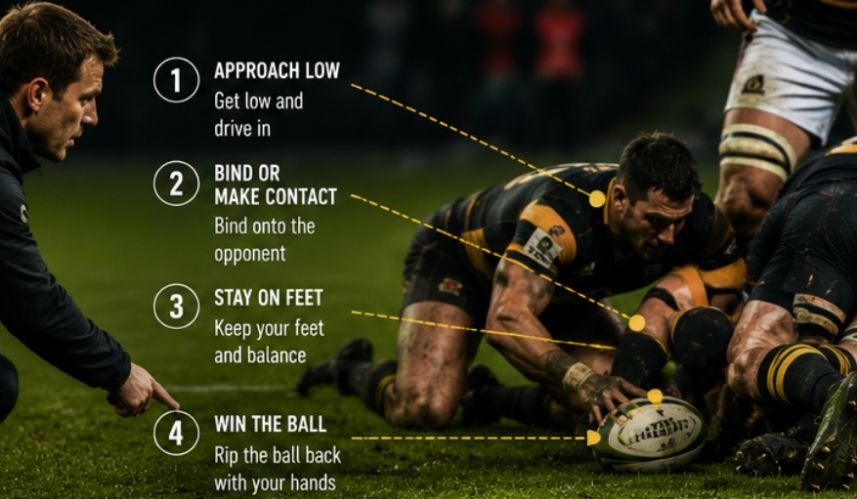
Arriving at the breakdown from the correct direction is mandatory for a legal turnover attempt. You must enter through the imaginary gate created by the back foot of the tackled player and tackler on your side of the pitch. Coming in from the side or behind the opponent immediately results in a penalty against your team.
Align your hips square to the opposition try line before stepping into the contact area. Keep your eyes open to assess the space and ensure no offside lines have been established yet. Arriving cleanly gives the referee a clear view of your legal entry.
Stay on Your Feet and Support Weight
Maintaining complete control of your posture is critical when contesting for loose ball. You must support your own body weight throughout the entire attempt without resting your forearms, chest, or knees on the ground or players. Placing your hands on the grass before grabbing the ball renders you off your feet.
Drop your hips low while keeping your chin up to preserve a strong spine. Flex at the knees and hinge cleanly at the waist to reach down toward the target area. If your upper body sags onto the tackled runner, the referee will blow the whistle for an off-feet violation.
Build a Wide Base for Stability

A broad stance provides the physical foundation necessary to withstand violent clean-out attempts from arriving attackers. Spread your feet wider than shoulder-width apart to create a low, unshakeable center of gravity. Plant your boots firmly into the turf to brace for impact.
Keep your head higher than your hips to maintain legal positioning and prevent neck strain for safety. A wide foot base prevents defenders from rolling you out through the side door during a collision. Holding this anchor position forces the ball-carrier to either release or concede a holding-on penalty.
Secure the Ball and Force Turnovers
Once your base is set, reach down decisively with open hands to clamp onto the ball. Pull the leather tightly into your chest using your arms and back muscles while driving upward through your legs. Demonstrating a clear lifting effort proves to the official that you are actively trying to play the ball.
Maintain your grip even when incoming attackers make contact with your shoulders. If the ball-carrier fails to release the ball immediately under your clamp, the referee will reward your effort with a turnover penalty.
Understanding rugby penalty vs free kick rules helps players recognize the type of sanction awarded and choose the most effective restart option after a successful breakdown contest.
Breakdown Rules and Player Safety

Understanding breakdown laws helps you avoid unnecessary penalties while keeping your neck and back safe during high-impact collisions.
Avoid Hands on the Ground
Placing your hands or forearms on the turf to support your body weight before grabbing the ball is illegal. Referees strictly penalize players who use the ground as a crutch during a breakdown contest.
Keep your hands floating above the grass as you lower your torso into position. Lift straight from the ball rather than bracing against the field first.
Show Clear Daylight After Tackling
If you made the tackle yourself, you must completely release the ball-carrier before attempting a jackal. Showing daylight means raising your hands clearly to demonstrate to the official that you have let go.
Once release is established, you can immediately lower your stance and target the ball legally. Failing to release before reaching down results in an instant penalty for tackler non-release.
Frequently Asked Questions
1. How to properly jackal?
To perform a jackal, arrive legally through the gate, maintain a wide foot base to support your own body weight, clamp onto the ball, and lift it before a ruck forms.
2. What is a jackler in rugby union?
A jackler is a defending player who arrives first at a tackle area, stays on their feet, and attempts to legally steal or contest the ball before an attacking ruck establishes.
3. Can you become a jackal after you tackle rugby?
Yes, you can jackal after making a tackle, but you must first fully release the tackled player, regain your feet, and enter legally through the tackle gate before reaching for the ball.
4. How to ruck in rugby for beginners?
To ruck, step over a tackled teammate, enter through the gate on your feet, bind onto opposition players, and drive them backward past the ball to secure clean possession for your team.
Steal the Ball and Win the Game
Mastering how to jackal in rugby union transforms your defensive play into a dominant turnover weapon. By focusing on legal entry through the gate, maintaining a wide supporting base, and clamping firmly onto the ball, you will consistently stop opposition attacks and earn crucial turnover penalties for your team.