Complete Women’s Rugby Gear Guide: What Every Player Should Own

Walking into your first rugby training session can feel exciting until someone starts talking about molded studs, scrum caps, and shoulder pads. Suddenly, buying a pair of boots doesn’t seem so simple. With so many options available, it’s easy to spend money on equipment you don’t actually need or overlook something that’s essential for your safety and performance.
The good news is that building a rugby kit doesn’t have to happen all at once. The right gear isn’t about owning the most expensive equipment; it’s about choosing pieces that fit well, protect you during contact, and hold up through countless training sessions and matches. Whether you’re completely new to the sport or returning after time away, having the right essentials makes every tackle, sprint, and scrum feel more comfortable and confident.
Why the Right Rugby Gear Matters

Women’s rugby is fast, physical, and demanding. Every piece of equipment has a purpose, whether it’s improving traction on the field, protecting against contact, or keeping you comfortable through changing weather conditions.
Good rugby gear also lasts longer. Looking at cost-per-wear instead of the lowest price often leads to better value because quality equipment can survive multiple seasons of training and competition. More importantly, properly fitted gear allows you to focus on the game instead of adjusting uncomfortable clothing or worrying about injuries.
Rugby Boots Are Your Most Important Investment
If there’s one item worth researching carefully, it’s your rugby boots. The right boots provide grip, stability, and confidence during quick direction changes, scrums, and tackles.
Choose your boots based on the surface you play on. Molded studs work well for firm or artificial fields, while metal studs provide better traction on softer, muddy pitches. Lightweight backs often prefer boots that support speed and agility, while forwards usually benefit from boots offering additional stability during physical contests.
Fit matters just as much as stud configuration. Boots should feel secure without squeezing your toes, allowing natural movement while preventing excessive slipping inside the shoe.
Never Skip a Quality Mouthguard

A mouthguard isn’t optional; it’s one of the most important pieces of rugby protective gear.
A custom-fitted mouthguard offers the best protection for your teeth and jaw, although boil-and-bite models remain a practical choice for many recreational players. Either option is far better than playing without one.
Since mouthguards absorb repeated impacts, inspect them regularly and replace them if they become loose, cracked, or misshapen.
Protective Gear Depends on Your Position and Comfort
Not every player wears additional protective equipment, but many find it helpful throughout the season.
Scrum caps help reduce cuts, abrasions, and cauliflower ear, particularly for forwards who experience regular contact in scrums and rucks. While they don’t prevent concussions, World Rugby-approved scrum caps provide lightweight protection without restricting movement.
Shoulder pads and chest padding offer another layer of protection by absorbing some of the impact during tackles. Because they’re made from soft materials, they maintain flexibility while adding confidence during physical play.
Match Apparel Should Work With You, Not Against You

Comfort becomes increasingly important during long training sessions and competitive matches.
A durable rugby jersey should fit closely enough to prevent opponents from easily grabbing excess fabric while still allowing unrestricted movement. Rugby shorts should be tough enough to handle repeated contact and free from pockets or hard zippers that could cause injuries.
Long rugby socks help keep shin areas protected from abrasions while holding socks securely in place throughout the match.
One item that deserves special attention is a high-impact sports bra. Unlike standard athletic bras, rugby-specific options provide better support during sprinting, tackling, and sudden changes in direction. Many female players consider this one of the most valuable pieces of equipment they own.
Compression base layers can also help regulate body temperature during colder matches while providing additional comfort underneath your kit.
Small Accessories Make a Big Difference
Beyond the obvious equipment, a few smaller items can improve both training and match-day preparation.
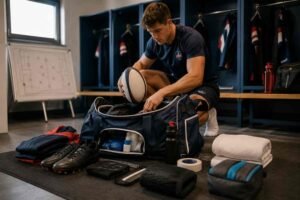
Pack these essentials in your rugby kit bag:
- Water bottle
- Athletic tape
- Small first-aid supplies
- Extra rugby socks
- Base layer
- Small towel
- Energy snack
- Recovery bands
- Weather-appropriate jacket
- Spare boot studs (if applicable)
Having everything packed before leaving home reduces unnecessary stress and keeps your focus on playing.
Common Buying Mistakes Players Should Avoid
Many players spend more than necessary simply because they buy equipment without understanding what they actually need.
One of the biggest mistakes is choosing boots based only on appearance rather than field conditions or proper fit. Others purchase oversized jerseys or ignore the importance of supportive sports bras, leading to discomfort throughout the season.
It’s also common for beginners to buy every accessory immediately. In reality, you can build your kit gradually as you gain experience and learn what works best for your playing style.
If you’re just starting out, learning about rugby gear mistakes new players make can help you avoid expensive purchases that don’t improve your performance.
Looking After Your Rugby Gear

Quality equipment lasts much longer when it’s cared for properly.
Allow boots to dry naturally after muddy matches instead of placing them near direct heat. Wash jerseys and shorts according to manufacturer instructions, air out your sports bag after every session, and regularly inspect protective equipment for signs of wear.
These simple habits help maintain hygiene while extending the lifespan of your rugby gear throughout the season.
FAQs: Complete Women’s Rugby Gear Guide: What Every Player Should Own
1. Do beginners need every piece of rugby gear immediately?
No. Start with essentials like rugby boots, a mouthguard, a sports bra, and your playing kit. Add optional protective gear as your experience grows.
2. Are scrum caps required in women’s rugby?
No. Scrum caps are optional, but many players, especially forwards, wear them for added protection against cuts and abrasions.
3. How should women’s rugby boots fit?
They should feel snug without causing pressure. Your heel should stay secure while your toes have enough room to move naturally during play.
4. How often should rugby gear be replaced?
Replace damaged protective equipment immediately. Boots, clothing, and accessories should be replaced when they no longer provide proper support, comfort, or durability.
Confidence Starts Before You Step Onto the Field
The best rugby kit isn’t the one with the highest price tag; it’s the one that helps you play comfortably, stay protected, and perform with confidence. Choosing equipment that fits properly, suits your position, and matches your playing conditions makes every training session and match more enjoyable. As your experience grows, your kit will naturally grow with you, reflecting what you actually need rather than what’s simply popular.
When your gear works for you, it’s easier to focus on the game instead of what’s missing from your bag.