Difference Between Flanker and Number Eight For Rugby Back Row
Lacing up your boots before a demanding match brings an immediate focus on positioning, communication, and responsibility. Standing beside fellow forwards, understanding the tactical difference between flanker and number eight can help you execute the game plan with greater confidence.
These back-row roles often overlap, yet each carries distinct duties at scrums, breakdowns, and in open play. By learning how flankers and number eights share the workload, protect possession, support attacks, and generate forward momentum, you can better appreciate their impact on team performance.
Key Takeaways
- Flankers pack down on scrum flanks; number eight locks down the back base.
- Number eight uniquely picks up balls directly from the scrum base.
- Openside flanker targets turnovers; blindside flanker stops boundary line attacks.
- Number eight serves as a power runner and dynamic backline connector.
- All three players form the essential loose forward unit in rugby.
Difference Between Flanker and Number Eight Keeps Rugby Fun
Ever watched a packed scrum collapse and wondered why one guy calmly grabs the ball while the rest sprint off blindly? Knowing these specific back-row nuances turns chaotic pitch action into pure tactical art. Understanding who hits who makes watching and playing far more exciting!
Set-Piece Alignment and Scrum Rules
Analyzing set-piece mechanics highlights how physical position dictates legal handling duties.
Flanker Binding Roles on the Outside Edges
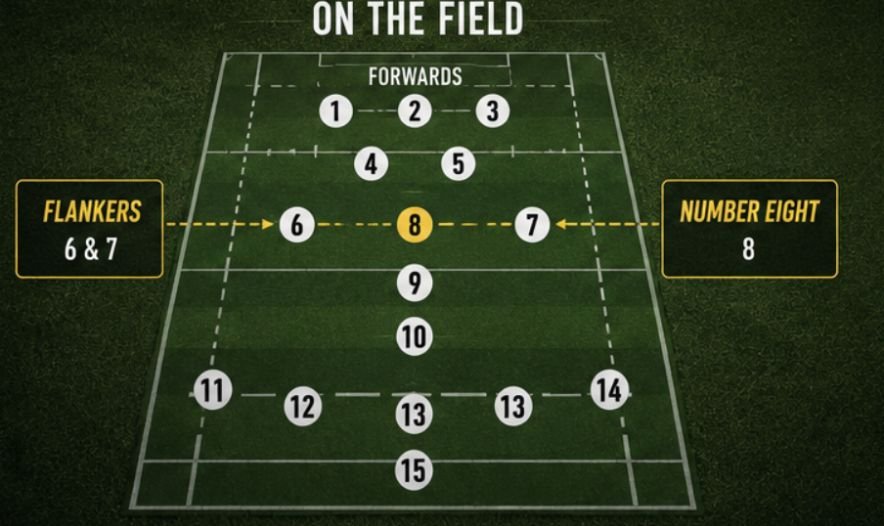
Flankers bind to the outer edges of the second row locks in every scrum set piece. Wearing jerseys numbered six and seven, they wrap one arm tightly around their lock partner. This outward positioning lets them unbind quickly to make tackles the moment the ball leaves the tunnel.
Number Eight Positioning at the Scrum Base
The number eight binds directly in the middle at the back base of the scrum, wedged firmly between both second-row locks. Wearing jersey number eight, this player anchors the entire pack push while steering the ball using precise footwork.
Ball Handling Exceptions at the Base
Specific set-piece regulations grant unique handling rights to the very tail of the scrum pack. The number eight is the only forward legally permitted to pick the ball up directly from the base of the scrum. Flankers must remain bound until the scrum officially ends before touching loose balls.
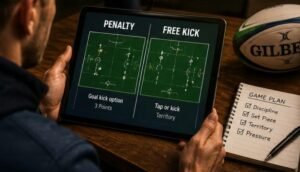
Learning rugby penalty vs free kick rules helps players understand the consequences of early detachment, illegal handling, and other scrum infringements.
On-Field Duties and Operational Mechanics
Dynamic phase play requires distinct tactical focus from each loose forward across the field.
Openside Flanker Ball Hunting and Turnover Tactics
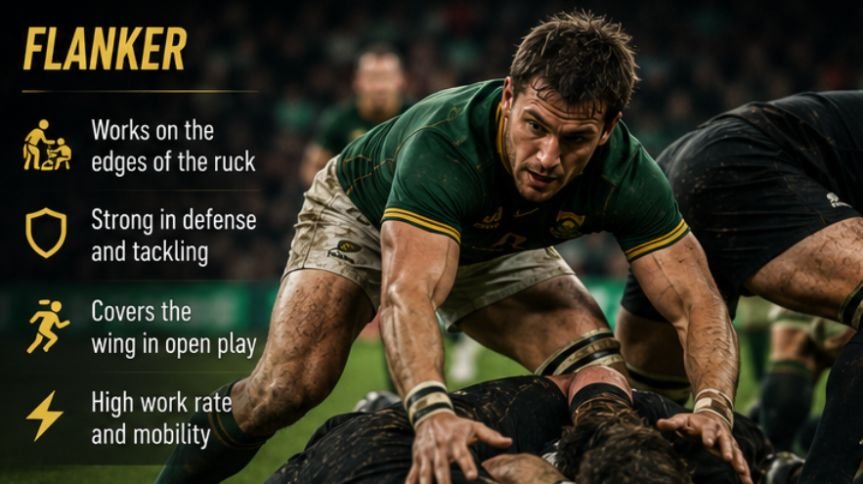
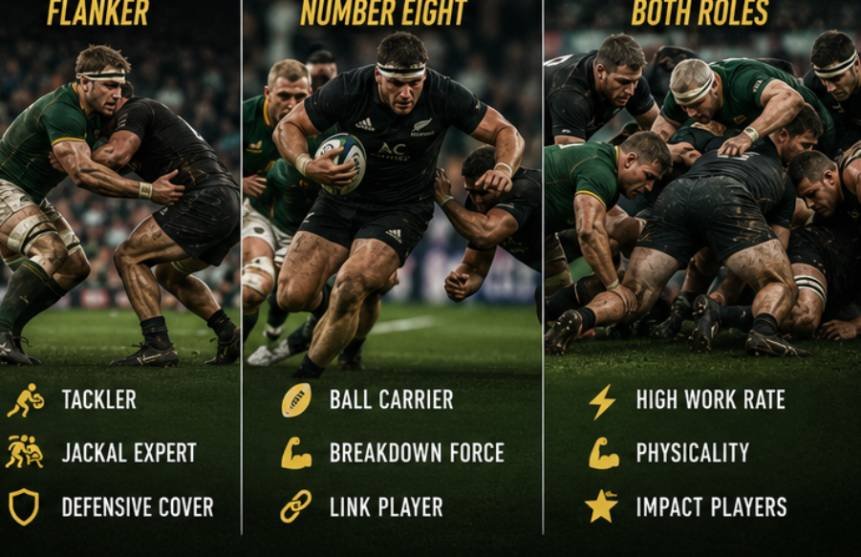
The openside flanker wearing jersey seven functions as the primary tackler and breakdown specialist for the team. Positioning on the open side of the pitch, their main goal is arriving first at rucks to execute legal turnover steals, commonly called jackaling.
Blindside Flanker Edge Defense and Physical Stopping Power
The blindside flanker wearing jersey six focuses heavily on raw physical contact along narrow field channels. They guard the short side of set pieces, stopping hard opponent rushes near the touchline with dominant tackles. Their presence secures crucial defensive boundaries during multi-phase attacks.
Number Eight Carrying and Lineout Jumping Capabilities
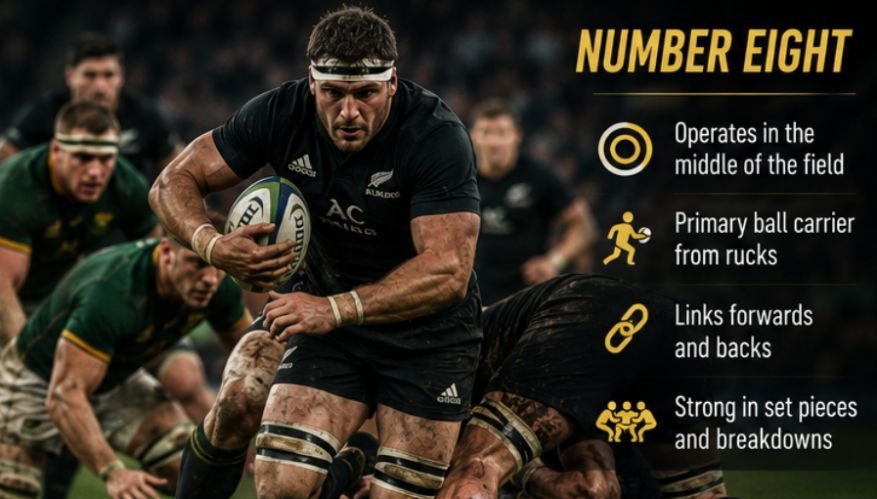
The number eight acts as a dynamic link between the hard-charging forward pack and the speedy backline. They function as heavy ball-carrying battering rams in open play, repeatedly smashing across the gain line.
Understanding how to score points in rugby helps number eights choose when to drive toward the try line, support a scoring phase, or position themselves for the next attacking opportunity. Additionally, their height offers an extra jumping option during tactical lineout throws.
Physical Traits and Skill Sets
Matching physical builds with specific position demands ensures players thrive in their back-row roles.
Openside flankers lean toward a lower center of gravity and exceptional flexibility to win breakdown battles. Blindside flankers are generally taller and broader, offering extra jumping power at the lineout and solid tackling strength. Both types of flankers need relentless aerobic fitness to keep up with play across the entire field.
Number eights blend impressive height with dense muscle mass, bridging the gap between locks and flankers. They must possess exceptional hand-eye coordination to handle tricky balls at the back of moving scrums. Their skill set requires smooth passing vision to link up smoothly with the scrum-half during set-piece plays.
Practical On-Pitch Application of Flanker and Number Eight
Applying back-row tactical principles during live matches boosts team performance and unit cohesion.
First, master your scrum exit responsibilities through weekly rep work with your halfback unit. If playing number eight, practice controlling the ball with your feet under heavy backward pressure before executing a clean pick-and-go drive. Flankers should practice bursting off the scrum flank without detaching early and conceding penalties.
Second, establish clear communication protocols between all three loose forwards before kickoff. Assign clear breakdown roles so your openside flanker attacks the ball while your blindside flanker clears out aggressive defenders. Coordinate coverage zones so your number eight bridges any defensive gap between the tight five and the fly-half.
Third, adapt your running angles based on field position to maximize attacking efficiency. Number eights should target tight channels off the scrum base to draw in heavy defenders and create space out wide. Flankers ought to run supportive trailing lines behind fast backs to keep play continuous.
Frequently Asked Questions
1. What is the hardest position in rugby union?
Fly-half is widely considered the hardest position because it requires mastering tactical kicking, organizing complex team attacks, making rapid strategic decisions, and executing solid tackles against charging opposition forwards under constant pressure.
2. Why doesn’t number 8 have a name in rugby?
The position simply takes its name directly from the jersey number worn at the scrum tail. Early rugby union rulebooks never assigned it a descriptive spatial name like flanker, prop, or lock.
3. Which flanker is better in rugby?
Neither flanker is inherently better because both blindside and openside flankers execute distinct, complementary tactical duties. Openside flankers excel at winning turnover balls, while blindside flankers provide essential tackling power and edge defense.
4. Is number 8 a good position in rugby?
Yes, number eight is an outstanding position for athletic, physical players who love carrying the ball, controlling scrum restarts, making impactful tackles, and linking forward play directly with the backline.
Mastering the Back Row Battle with Supreme Confidence
Grasping the tactical difference between flanker and number eight empowers players and fans to read the game like seasoned professionals. Flankers deliver crucial tackle work rates and breakdown steals, while the number eight provides essential ball-carrying power off scrum bases. Developing these individual back-row skills ensures your forward pack controls physical contests and wins crucial match momentum.