Decoding Rugby Penalty Vs Free Kick Rules For Every Fan
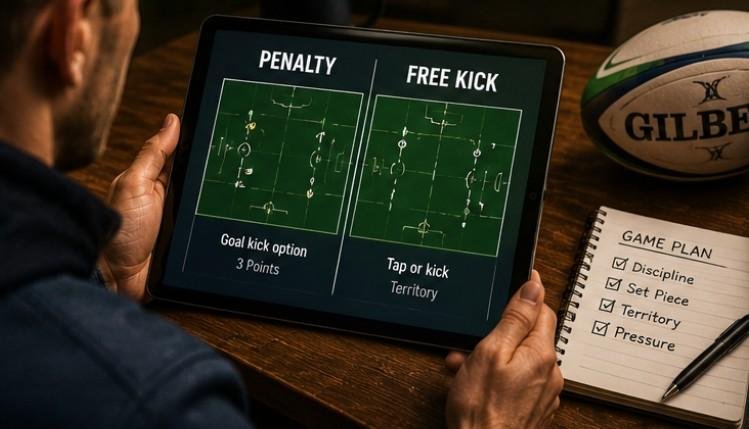
Understanding match restarts can sometimes feel like decoding an ancient language while a powerful prop charges directly toward you. Yet learning rugby penalty vs free kick rules makes the action far easier to follow, whether you are watching from the stands or playing on the field. These decisions influence possession, territory, scoring chances, and match momentum.
Once you understand why referees award each restart, you can appreciate tactical choices more clearly, avoid unnecessary confusion, and enjoy chaotic weekend fixtures without shouting blindly at every whistle.
Key Takeaways
- Sanction Awareness: Mastering restart rules keeps players focused and sharpens team strategy.
- Penalties: Awarded for serious fouls, offering a direct 3-point kick at goal.
- Free Kicks: Punish minor technical errors with no direct goal attempts allowed.
- Lineout Control: Kicking to touch on a penalty retains possession; free kicks give the lineout to opponents.
- Game Awareness: Learning referee arm signals elevates match reading for both players and fans.
Why Match Restart Rules Are Important?
Figuring out referee whistles prevents endless confusion on the sidelines while transforming you into the smartest tactical expert in the stadium during rugby union. Knowing these rule differences ensures you never celebrate a phantom three point score or panic when the defense rushes forward to shut down a quick tactical play.
Understanding Penalty Kicks On The Pitch
Major infringements require immediate intervention from the match official to maintain order and fairness.
Severity And Infraction Triggers
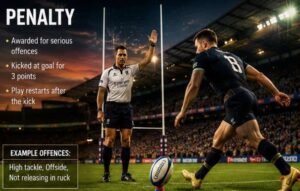
Severe law breakages and cynical fouls force referees to award major disciplinary sanctions immediately. Common triggers include high tackles around the neck, deliberately collapsing active scrums, or failing to release the ball carrier on the ground.
Scoring And Touchline Privileges
Major sanctions offer massive tactical advantages that can completely shift the scoreboard momentum. Teams can kick directly at the posts for three points or send the ball into touch while retaining the lineout throw in.
Defensive Requirements And Restrictions
Opposing players face strict behavioral guidelines when a major sanction is awarded against them. Defending squad members must immediately retreat ten meters and stand completely still without attempting to charge down the kick.
Exploring Free Kick Regulations
Technical errors require polite restarts rather than heavy scoreboard punishments from the referee.

Minor Technical Infringement Triggers
Minor slip ups and procedural mistakes result in lighter restarts during open play. Typical causes involve time wasting at set pieces, early engagement in scrums, or claiming a fair catch mark inside the twenty two meter zone.
Scoring Limitations And Territory Rules
Lighter sanctions restrict direct scoring options to keep the match flowing smoothly. Teams cannot kick directly for goal points, and kicking straight into touch from outside the twenty two yields possession to the opposition.
Aggressive Defensive Charging Options
Defenders enjoy distinct tactical freedoms when facing minor technical restarts on the field. Opponents must retreat ten meters but can legally charge down the kicker the exact moment forward movement begins.
Mastering Rugby Penalty Vs Free Kick Rules In Action
Read the Referee’s Signal Immediately
Applying restart protocols correctly begins with recognizing the referee’s decision as soon as play stops. Watch the referee’s arm position, whistle tone, and verbal explanation to determine whether the infringement results in a penalty or a free kick.
Quick identification prevents hesitation, reduces confusion, and allows the team to organize before the opposition applies pressure. Players should also listen for any advantage call or instructions about the mark.
Assess Field Position and Match Situation
Once the decision is clear, evaluate where the restart has been awarded. Consider the distance from the opponent’s try line, the score, the time remaining, and the strength of your set piece. A quick tap may work well against a retreating defense, while a kick to touch can create territory and a lineout opportunity. In scoring range, the captain may choose a kick at goal instead.
Organize the Team Before Restarting
The team must establish attacking shape quickly before taking the restart. Ball carriers, support runners, and playmakers should create enough depth to move effectively without becoming isolated. Clear communication is essential, especially when choosing a fast tap.
Proper spacing and structure reduce handling errors, protect possession, and prevent defenders from disrupting the attack immediately after play resumes.
Rugby Penalty vs Free Kick Rules Practical Tips
Applying these core rules on match day requires calm decision-making and sharp execution. It helps to score points in rugby.
rugby penalty vs free kick rules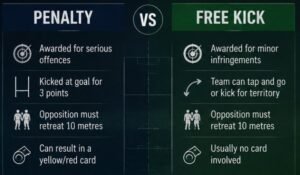
Step one involves assessing field position the second the referee signals an infringement in your favor. If your team is within thirty meters of the goalposts on a penalty call, pointing to the posts secures three valuable points on the scoreboard. When positioned deep in your own territory, launching a touch kick grants your forward pack an attacking lineout deep in opposition territory.
Step two focuses on speed and defensive awareness during quick tap scenarios. For both restart types, tapping the ball against your boot allows immediate running plays before opposition defenders set their defensive wall. However, always confirm the referee has marked the exact spot of the infraction before tapping, avoiding accidental turnovers or blown opportunities.
Step three centers on disciplined execution during defensive free kick situations. Defenders must retreat ten meters rapidly while keeping eyes fixed on the kicker’s lead foot to launch a legal charge down. Understanding that opposition kicks to touch hand your team the resulting lineout throw-in helps backline players setup aggressive counter-attacking platforms.
Frequently Asked Questions
1. What is the difference between a penalty and a free kick in rugby?
Penalties punish serious offences allowing direct goal shots and lineout possession retention whereas free kicks handle minor technical errors prohibiting direct points and handing touchline throws to opponents.
2. Does a penalty count as a free kick?
No they are entirely separate disciplinary sanctions governed by different World Rugby laws regarding scoring rights defensive charges and territorial management during competitive matches.
3. What is the free kick rule in rugby?
It provides a safe restart for minor technical infractions where teams can tap or pass quickly but cannot score direct points while alert defenders are permitted to charge down the kicker.
4. Can you charge down a penalty kick in rugby union?
Defenders cannot charge down a penalty attempt at goal and must stand completely motionless until the ball is kicked whereas free kicks allow immediate charging upon movement.
Whistle Wisdom For Victory
Mastering rugby penalty vs free kick rules deepens your understanding of how discipline, tactics, and referee decisions shape every match. A penalty can create a major scoring opportunity or change field position, while a free kick often rewards quick thinking and smart execution.
Knowing the difference helps you follow momentum shifts, appreciate strategic choices, and understand why players react so strongly to each whistle. The next time you watch rugby, you will see far more than a stoppage; you will recognize a tactical moment unfolding.