Decoding Pitch Positioning: What Is Offside in Rugby Union?

Standing on the turf during a fast-paced match can leave even seasoned athletes second-guessing their positioning. Learning what is offside in rugby union took me several costly referee whistles early in my playing career before everything clicked.
Understanding this foundational law transforms how you read space, timing, and defensive lines on matchday. Let us break down every scenario so you never give away an easy penalty kick to the opposition again.
Key Takeaways:
- Offside occurs when you are in front of the ball or the hindmost foot.
- Offside players cannot tackle, block, or touch the ball until retreat criteria are met.
- Kicking triggers a strict ten-meter bubble for all forward-stationed chasers.
- Rucks, mauls, scrums, and lineouts create dynamic, imaginary offside boundaries across the field.
- Retiring behind onside teammates or an opponent running five meters resets your status.
Understanding Open Play and Kicking Offside Rules
Mastering general play positioning requires tracking ball movement and team kicks closely.
Basic Principles in Open Play
Every pitch location relies on the position of the ball and your teammates.
In open play, a player is in an offside position whenever they stand or move closer to the opponent try line than the teammate holding or last playing the ball. Being in an offside position is not an offense by itself.
The infraction occurs the moment that player actively participates in the game, blocks defenders, or advances toward the ball before getting back onside.
Understanding what is a knock-on in rugby also helps players distinguish an accidental forward handling error from an offside infringement when possession becomes contested.
An offside player becomes legally onside when the ball-carrier runs past them or when an onside teammate passes or runs ahead of them. You must retreat immediately without interfering until a legal reset places you back into valid play.
The Ten-Meter Bubble During Kicks
Tactical boots downfield create strict positioning demands for chasing attackers.
When a teammate kicks the ball, any player positioned in front of the kicker is immediately offside. These players must retreat or remain stationary and must not advance or interfere with an opponent until they are put onside. They cannot charge down the catcher or press the space until the offside status clears.
Offside chasers are put onside if an onside teammate runs past them downfield. Alternatively, an opponent can put them onside by catching the ball and running five meters, kicking it, or intentionally touching the ball without gaining full possession.
Offside Laws Across Set Pieces and Breakdowns
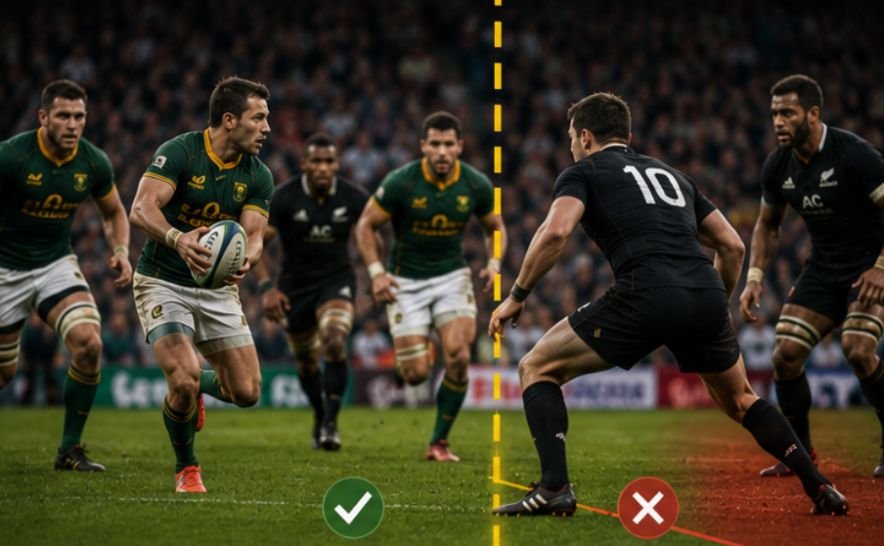
Different game situations dynamically create new imaginary boundaries on the turf.
Breakdown Boundaries at Rucks and Mauls
Physical contests on the ground generate specific defensive gates for both teams.
Once a ruck or maul forms, an offside line runs across the field parallel to the goal line through the hindmost foot of the last player in the breakdown. Players must join these contact contests from a behind-the-foot onside position. Any player joining from the side creates an immediate penalizable offense.
Players leaving the breakdown or retreating from defensive lines must immediately retire behind their team offside line. Lingering in the passing channels or blocking the scrum-half path results in a penalty kick against your team.
Set Piece Spacing for Scrums

Fixed restarts demand disciplined backward spacing from every non-packing backline player.
The offside line at a scrum is an imaginary line running through the hindmost foot of the last player in the scrum pack. All players except the scrum-halves must remain at least five meters behind this line until the ball emerges.
Understanding rugby positions and numbers explained helps players identify who packs into the scrum, where the scrum-halves may stand, and which teammates must remain behind the five-meter offside line. Moving forward before the ball is out gives away free field territory.
Moving forward before the ball is out gives away free field territory.
Scrum-halves follow special rules regarding their spatial allowance. The scrum-half offside line is the middle line where the ball is fed into the tunnel, requiring sharp focus from both playmakers.
Cushioning the Field at Line-Outs
Touchline restarts establish wide defensive zones to keep backline moves dynamic.
During a line-out, offside lines are drawn ten meters back from the line of touch and parallel to the goal lines. Forwards actively participating in the line-out jump or lift must stay between these lines until the ball is thrown cleanly.
Backline players not involved in the line-out contest must stand at least ten meters back from the line of touch. They must hold this boundary cushion until the line-out officially ends or the ball passes beyond the original mark.
What Is Offside in Rugby Union Real Life Application
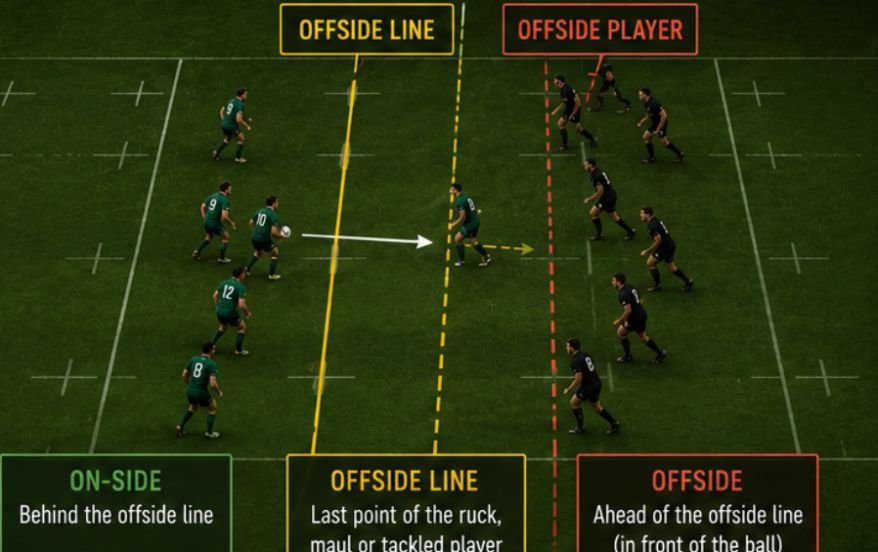
Applying positional laws on matchday requires clear split-second habits during game action.
First, lock your vision on the ball-carrier before committing to any beat forward defensive rush or support run. Knowing where the ball is ensures you never step ahead of the active attack line during open play.
Second, at the tackle contest, glance down at the last feet in the pile to spot your entry gate. Always circle around to enter from behind the hindmost foot rather than cutting across laterally from the side.
Third, when your fly-half kicks, stop forward momentum immediately if you are positioned ahead of the boot. Retreat toward your own goal line until an onside teammate sprints past your position.
Fourth, keep a five-meter cushion at scrums and a ten-meter distance at line-outs until the set piece finishes. Respecting these distances prevents costly whistles during critical defensive sets.
Fifth, listen closely to referee verbal cues on the pitch during dynamic plays. Referees frequently shout warnings like “Blue eight, retire!” giving you a brief moment to step back onside before blowing the whistle.
Frequently Asked Questions
1. What is the offside rule in rugby union?
In rugby union, a player is offside if they are ahead of the teammate carrying the ball or the teammate who last played it. Offside players cannot touch the ball, tackle opponents, or advance forward until put back onside legally.
2. What is offside in simple terms?
In simple terms, offside means being further down the pitch toward your opponent goal line than the ball or the last breakdown point. You must stay behind the ball to play legally without causing a penalty restart.
3. What are the five main rules of rugby?
The five core rules include passing backward only, tackling below the sternum, staying onside during play, releasing the ball immediately when tackled to the ground, and competing cleanly behind hindmost feet at breakdown set pieces.
4. Why is offside illegal?
Offside is illegal because it prevents defensive teams from clogging attacking spaces unfairly. The rule preserves open running space across the pitch, ensures fair athletic contest, and keeps match play structured, fast, and exciting for everyone.
For That Whistle-Free Mastery
Mastering positional awareness transforms how you understand what is offside in rugby union during intense match conditions. By respecting offside lines at rucks, staying back on tactical kicks, and maintaining proper set piece depth, you keep your team on the attack and off the penalty ledger. Keep honing your pitch instincts, stay behind the ball, and lead your squad to victory with confidence!