Rugby Made Easy: How Does a Ruck Work in Rugby Games?

Stepping onto the field for your first match brings a rush of excitement, nerves, and physical intensity. Learning how does a ruck work in rugby is essential when players collide and compete for possession after a tackle. From my years coaching youth forwards, I have seen how quickly this phase can appear chaotic to beginners.
Once players understand body position, entry angles, support roles, and legal contact, the ruck becomes an organized contest that protects possession, creates attacking speed, and builds confidence across the entire team.
Key Takeaways
- A ruck forms when opposing players bind over a tackled player and ball.
- Players must enter through the imaginary gate from behind their hindmost foot.
- Hands are strictly forbidden; you must drive opponents back to win possession legally.
- Staying on your feet and supporting your body weight ensures player safety.
- Clean rucking clears defenders and keeps fast attacking momentum alive for the team.
Ruck Work in Rugby Matters for Every Player
Understanding how does a ruck work in rugby makes watching or playing the sport ten times more exciting. Without rucks, rugby would just be a chaotic game of tag with endless whistles. Knowing these rules helps you spot clever plays, avoid silly penalties, and look like a total tactical genius in front of your friends.
What Is a Rugby Ruck and How Does It Form?
The definition of a ruck centers on physical contact directly over a grounded ball.
The Core Phase of Play
A ruck officially forms when a ball carrier goes to ground and at least one player from each team engages physically on their feet directly over the ball. Open play temporarily pauses, converting the breakdown zone into a technical contest for ground dominance.
Creating Offside Lines
Once players bind over the ball, two imaginary offside lines extend across the pitch from the hindmost foot of each team’s last player in the breakdown.
Understanding what is offside in rugby union helps players recognize where they must stand, when they can advance, and how to avoid interfering illegally around the ruck.
Defending players not joining the contact zone must fall back behind this mark or give away easy penalties.
Essential Laws Governing Proper Ruck Execution
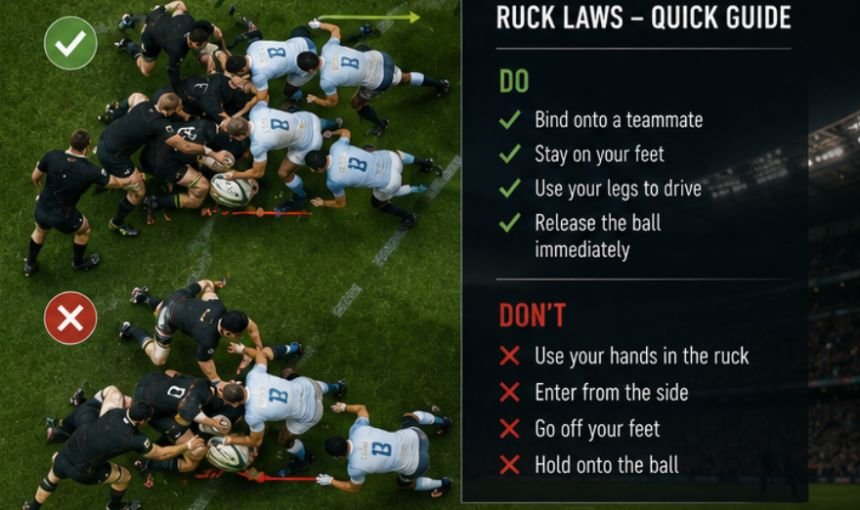
Maintaining strict adherence to breakdown laws of rugby union protects player safety and keeps the match flowing smoothly.
Entering Through the Gate
Arriving players must enter the contact zone directly from behind the hindmost foot of their own teammate, a boundary commonly called the gate. Entering from the side remains illegal because it bypasses the direct physical contest and disrupts fair competition.
Supporting Weight and No Hands
Every participant must stay on their feet and support their own body weight throughout the entire engagement. Touching the ball with hands inside an active ruck is strictly prohibited, forcing teams to rely on clean footwork and collective driving force.
Mastering How Does a Ruck Work in Rugby Step by Step
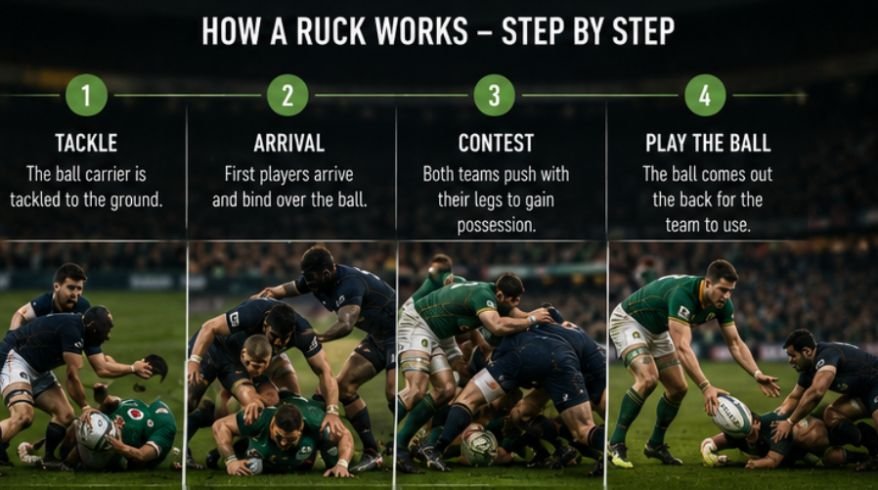
Mastering precise movement patterns turns a chaotic physical contest into clean, predictable possession for your backline.
Approaching with Low Body Height
Arriving support players should drop their hips below their shoulders and keep their eyes up to maintain balance before making contact.
Knowing how to choose rugby boots for speed without sacrificing grip helps players maintain traction, accelerate into the breakdown, and stay stable when driving through contact.
Driving forward with a flat back and active legs ensures maximum leverage when engaging incoming defenders.
Sealing or Clearing Out the Threat
First arriving attackers must choose whether to seal over the ball or physically clear out defensive poachers attempting to steal it. Wrapping arms around opponents using full arm binds guarantees safe and legal physical contact according to modern referee standards.
Common Penalties and Referee Decisions to Watch
Understanding breakdown terminology helps players recognize mistakes, respond to referee calls, and adjust their technique before repeated infringements cost the team territory or points. Most penalties at the ruck occur because players fail to release, enter legally, or remain on their feet.
Tackled Player Holding Onto the Ball
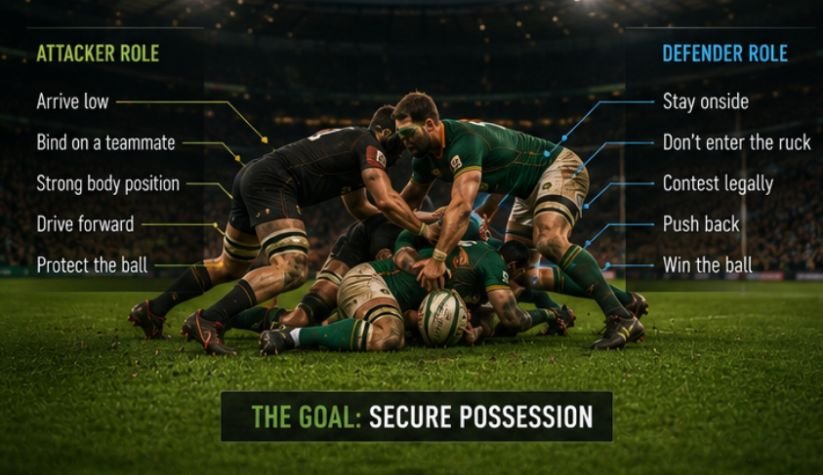
After being brought to ground, the tackled player must immediately release the ball and make it available. They may place, push, or present it toward their teammates, but they cannot hold possession while support players arrive. Referees usually penalize a player who prevents a legal defender from competing for the ball. Quick presentation gives teammates a better chance to secure possession and generate fast attacking play.
Tackler Failing to Roll Away
The tackler must release the ball carrier and move away from the contest without delay. Remaining underneath the tackled player, blocking access, or slowing the ball can result in a penalty. Even accidental interference may be punished when it prevents the attacking team from recycling possession cleanly.
Entering From the Side
Arriving players must enter the breakdown through the gate, which is the area directly behind the tackled player or tackler. Joining from the side creates an unfair angle and often leads to immediate referee intervention. Players should approach squarely and drive forward rather than cutting across the ruck.
Going Off Feet or Sealing the Ball
Players must remain on their feet when contesting or protecting possession. Diving over the ball like in soccer, collapsing onto bodies, or deliberately sealing the contest prevents a fair challenge. Referees may award a penalty when attackers use the ground to block defenders instead of supporting their own weight legally.
Frequently Asked Questions
1. What are the rules of rucking in rugby?
Players must enter on their feet through the gate, stay supported on their feet, bind with full arms, and refrain from touching the ball with their hands until it leaves the breakdown area.
2. What is a ruck vs scrum?
A ruck occurs spontaneously in open play immediately after a tackle, while a scrum is a structured restart ordered by the referee following minor infractions like a forward pass or knock-on.
3. Can you jump over a ruck to score in rugby?
No, jumping over a ruck or intentionally diving over players on the ground is strictly illegal due to serious player safety regulations against dangerous play on the field.
4. Is rucking illegal in rugby?
Rucking using feet to move the ball is legal, but shoe-shining or using boots aggressively against an opponent’s body is strictly penalized as foul play by referees.
Ruck On and Rule the Pitch!
Knowing how does a ruck work in rugby gives players and fans a deeper appreciation for the sport’s tactical intensity. When support players enter legally through the gate, lower their body height, and drive over the ball, they turn raw physical effort into continuous attacking momentum. Focus on basic entry mechanics during your next team training session to master this essential phase!