Rugby Sprint Interval Workout for Female Players

A hard sprint session should make you faster, not teach you to run slowly while exhausted. This rugby sprint interval workout for female players develops acceleration, maximum velocity, repeat-effort fitness, and faster recovery after ground contacts.
I recommend this structure because rugby rarely demands one isolated sprint. Players accelerate into space, chase a break, recover on defense, hit the floor, and reload. The goal is not endless fatigue. It is producing useful speed again during the next decisive phase.
Why This Session Fits Women’s Rugby
Rugby combines explosive actions with incomplete recovery. The aerobic system helps restore energy between efforts, while sprinting and contact tax anaerobic pathways. World Rugby recommends conditioning that reflects this intermittent pattern and positional demands.
A smart rugby sprint interval workout for female players separates maximum-speed work from fatigue-based conditioning. Pure speed needs generous rest. Repeated sprints need controlled incomplete rest. Ground-contact drills add game realism without requiring full-contact practice.
World Rugby describes repeated sprints as three-to-seven-second efforts, often using roughly a 1:3 work-to-rest ratio. A 2024 meta-analysis found this training can improve speed, repeated-sprint ability, change of direction, aerobic fitness, and jumping.
Prepare Before the First Sprint
Field Setup
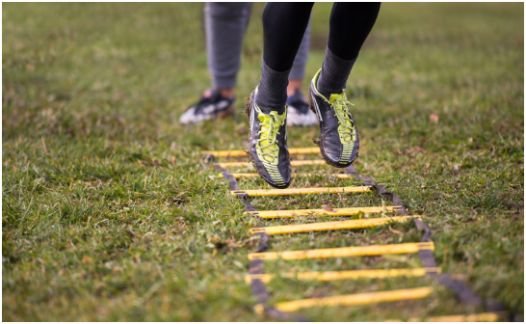
Use a safe grass or turf field, four cones, and a stopwatch. Mark distances of 10, 20, and 30 meters. Use the try line and 22-meter line for the repeated block when available.
Complete the rugby sprint interval workout for female players in cleats only when the surface is secure and familiar. Reduce your speed or move the session when the ground is wet, loose, or uneven.
Ten-Minute Dynamic Warm-Up
Jog easily for three minutes. Complete 10 walking lunges, active pigeon stretches, and leg swings on each side. Then perform 20 meters each of A-skips, B-skips, and ankle pogos.
Finish with three 30-meter build-ups at about 50%, 70%, and 85% effort. The final run should feel quick but relaxed. A separate mobility routine for women’s rugby players can address individual restrictions before sprint days.
The Complete 45-Minute Session

This rugby sprint interval workout for female players contains three focused blocks. Block A protects speed quality. Block B challenges recovery between efforts. Block C adds the floor-to-feet transition common after tackles and rucks.
Block A: Acceleration and Speed
Run six maximum-effort 10-meter sprints from a dead start. Rest for 60 to 90 seconds after each repetition. Focus on forward posture, aggressive arm action, and powerful first steps.
Next, perform four 20-meter build sprints at about 90% effort. Walk slowly back to the starting line for recovery.
Finish the block with two 30-meter flying sprints. Use a smooth 10-meter approach before reaching maximum speed through the final 20 meters. Rest for two minutes between the flying sprints.
Do not rush this block. If your posture collapses or your steps become forced, extend the recovery period. Speed develops through powerful, technically clean repetitions rather than breathlessness.
Block B: Repeated Sprint Ability
Run six maximum-effort sprints from the try line to the 22-meter line. Begin a new sprint every 30 seconds. Use the remaining time to decelerate safely and walk back.
Complete two sets with 90 seconds of recovery between them. This gives the rugby sprint interval workout for female players 12 game-relevant efforts without adding unnecessary volume.
Time each sprint when possible. Research shows tackle-like actions raise physiological demand and reduce sprint performance, so running-only conditioning does not tell the whole rugby story.
Avoid bending over immediately after each repetition. Walk back with controlled breathing and prepare your starting position before the next interval begins.
Block C: Down-and-Up Capacity
Start flat on your stomach. Pop up quickly, sprint 10 meters, lower yourself under control, rise again, and sprint 10 meters back to the starting point.
Begin a new repetition every 45 seconds and complete eight repetitions. Keep the get-up explosive, but never crash into the ground. Use your hands to control the descent.
World Rugby treats repeated high-intensity efforts as broader than straight sprinting because rugby also includes collisions, wrestling, and rapid transitions from the floor.
This final block should feel demanding. However, every repetition should still resemble an athletic rugby movement rather than a survival drill.
Adjust the Workout by Position

Tight Forwards
Props, hookers, and locks can cap their longest sprint at 20 meters. Replace the flying sprints with four lightly resisted starts using a sled or resistance band.
Choose a resistance that allows quick and natural movement. A load that forces slow steps or excessive forward leaning will change the sprint mechanics too much.
You can also complete a five-meter resisted drive before selected 10-meter sprints. This adjustment places more emphasis on contact acceleration and short-distance power.
Loose Forwards and Backs
Loose forwards and backs can retain the original distances. Backs should keep the flying sprints because open-field play creates more maximum-speed opportunities.
Flankers and number eights may alternate between standard starts and down-and-up starts. Scrum-halves can add a lateral shuffle before selected sprints to replicate movement around a ruck.
Female rugby research also shows that sprint profiles differ by age and playing position, supporting role-specific programming rather than one universal prescription.
Use the 5% Quality Rule
My practical safeguard for this rugby sprint interval workout for female players is to stop the repeated set when performance falls more than 5% below the fastest clean sprint.
Suppose your best 22-meter time is 3.80 seconds. Five percent equals 0.19 seconds, making 3.99 seconds your quality limit.
When two consecutive repetitions take longer than 3.99 seconds, end the set or extend your recovery. Do not keep sprinting simply because more repetitions remain on the plan.
This rule stops speed training from becoming slow conditioning. It also provides a measurable progression target. Improve your consistency before adding more repetitions or reducing the recovery period.
Schedule and Progress the Workout
Place the rugby sprint interval workout for female players after a rest day or before a lower-volume skills session. Avoid completing it after heavy lower-body lifting, hard contact training, or a demanding match.
Begin with one session each week. Advanced preseason players may add a shorter second session when sprint times remain stable and muscle soreness resolves normally.
Research reviews suggest two weekly repeated-sprint sessions can work during structured training blocks, although total team load must still guide recovery.
Progress only one variable at a time. Add one sprint, reduce the recovery slightly, or introduce ball carrying. Do not change every variable during the same week.
Sprinting with a rugby ball can still improve sprint performance, making selected ball-carrying repetitions a practical progression.
During the competitive season, reduce Block B to one set when matches, travel, and contact practices already create significant fatigue.
Common Sprint-Training Mistakes
During a rugby sprint interval workout for female players, skipping the warm-up creates hesitant acceleration. Cutting the rest in Block A turns speed work into conditioning. Ignoring deceleration adds unnecessary strain.
Another mistake is completing every repetition at an uncontrolled maximum effort. Sprint hard, but maintain posture, foot placement, and a safe stopping distance.
Chasing volume after sprint times collapse only rehearses slow movement. The 5% rule solves that problem because the stopwatch decides when quality has disappeared.
Frequently Asked Questions
1. How often should female rugby players do sprint intervals?
Most players should begin once weekly and progress only when speed quality and recovery remain strong.
2. Is this rugby sprint interval workout for female players suitable in season?
Yes, but reduce Block B and schedule the session away from matches and heavy contact days.
3. Should forwards and backs use equal sprint distances?
No. Tight forwards can emphasize 5-to-20-meter acceleration, while backs retain more maximum-speed work.
4. How much recovery is needed afterward?
Use at least one low-load day before another demanding running or lower-body power session.
Finish Fast, Not Fried
A successful rugby sprint interval workout for female players should leave you tired but technically sharp. Protect the fastest work, time the repeated efforts, and stop when speed falls beyond the 5% limit.
For your next session, record every 22-meter sprint. Use those numbers to decide whether to add volume, maintain the current plan, or recover longer. Fast rugby comes from repeatable quality, not punishment.